The Complete Guide to Turnkey Racing Simulators in 2026

The Complete Guide to Turnkey Racing Simulators in 2026

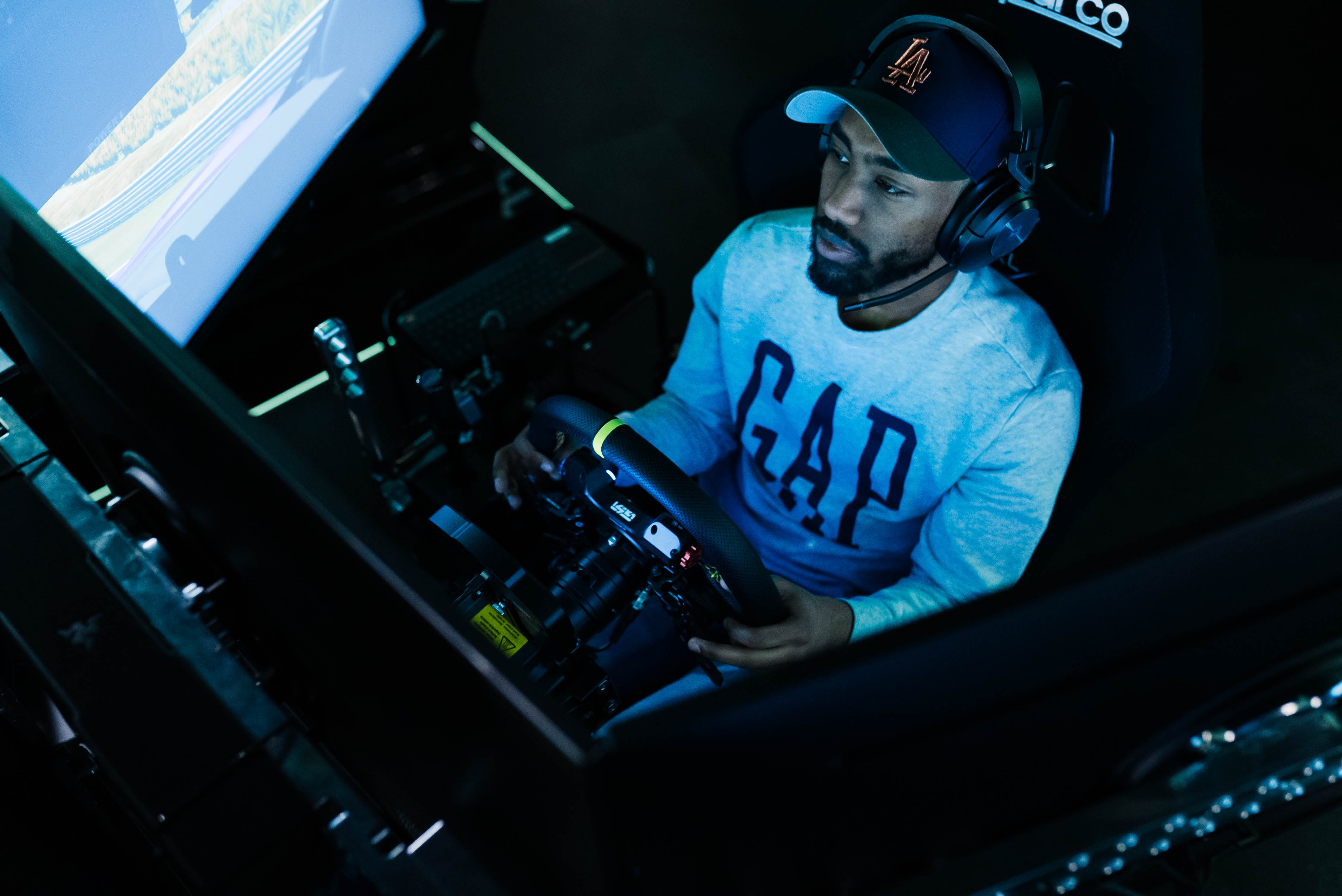
A turnkey racing simulator arrives at your door fully assembled, tested, and ready to race. No researching parts. No compatibility headaches. No weekends spent building and troubleshooting. You plug it in, sit down, and start driving.

For buyers who value their time and want a professional-grade experience without the DIY learning curve, turnkey simulators represent the smartest path to sim racing. This guide breaks down everything you need to know — from what "turnkey" actually means to how to choose the right one for your goals and budget.

What Does "Turnkey" Actually Mean?

In the racing simulator world, "turnkey" means the complete package:

  • Cockpit frame and racing seat — professionally welded or CNC-machined aluminum construction
  • Display system — single, ultrawide, or triple monitors already mounted and calibrated
  • Gaming PC — specced for sim racing, pre-installed with software and optimized settings
  • Wheel and pedals — force-feedback wheel and load cell or hydraulic pedals, pre-mounted
  • All cables and connections — professionally routed and managed
  • Motion platform (on motion models) — installed, calibrated, and ready to run
  • Warranty and support — one point of contact for everything

The key distinction: with a turnkey simulator, you're not buying components and hoping they work together. You're buying a complete, tested system from a single manufacturer who guarantees the entire experience.

Turnkey vs. DIY: The Real Comparison

The DIY Path

Building your own simulator means sourcing each component separately: cockpit frame (Simlab, 80/20 aluminum), wheel base (Fanatec, Moza, Simucube), pedals, monitors, mounts, PC, cables, and dozens of small parts. The total cost often comes within 10-20% of a turnkey solution, and the hidden costs add up fast:

  • 40-80 hours of research across forums, YouTube, and Reddit
  • 20-40 hours of assembly, cable management, and troubleshooting
  • Multiple warranties from different manufacturers (good luck with finger-pointing)
  • Compatibility risks — some wheel bases don't fit some cockpits without adapter plates
  • No professional cable management — most DIY builds look like a tangled mess behind the cockpit
  • Software configuration — getting FFB settings, motion software, and display settings right takes trial and error

The Turnkey Advantage

A turnkey simulator eliminates all of these friction points. When you order a Sim Coaches Pro, Omega, or Elite, you get:

  • Guaranteed compatibility — every component is tested together before shipping
  • Professional assembly — precision-built by people who build simulators every day
  • Clean cable management — cables routed and secured for a premium look
  • Pre-configured software — FFB, display, and motion settings optimized for your exact hardware
  • Single warranty — one phone call, one company, complete coverage
  • Time to race — unbox, plug in, drive. Under 30 minutes from delivery to your first lap.

Cost Comparison

Here's a realistic cost comparison for a mid-range sim racing setup in 2026:

  • DIY Build: $9,500 - $13,000 (parts only, no labor, multiple warranties)
  • Sim Coaches Pro (turnkey): Starting at $7,999 (complete, assembled, warranted)
  • Competitor Turnkey: $12,000 - $18,000 (similar specs, longer lead times)

Use our Racing Simulator Cost Calculator to build your exact configuration and see the real numbers.

Choosing the Right Turnkey Simulator

For Beginners and Home Enthusiasts: Sim Coaches Pro

The Pro is the entry point to professional sim racing. It includes everything you need for a complete experience without the motion platform. Starting at $7,999, it fits in a compact 5' × 5' space and delivers force-feedback realism that will transform how you experience sim racing.

Best for: First-time buyers, apartment/home use, budget-conscious enthusiasts who want professional quality.

For Serious Racers: Sim Coaches Omega

The Omega adds motion capability, an ultrawide or triple monitor option, and upgraded peripherals. Starting at $14,999, it's designed for racers who want the full immersive experience including 3DOF motion that lets you feel braking forces, cornering G's, and track surface detail.

Best for: Experienced sim racers, dedicated sim rooms, racers transitioning from DIY setups.

For Professionals and Commercial Use: Sim Coaches Elite

The Elite is the flagship — full 6DOF motion, triple screens, professional-grade components throughout. Starting at $29,999, it's built for serious competitors, commercial sim centers, and corporate entertainment applications where the simulator needs to impress every single user.

Best for: Professional racers, sim centers, event rentals, high-end home installations.

Not sure which model is right? Take our Which Simulator Is Right For Me? quiz for a personalized recommendation.

What to Look For in a Turnkey Simulator

Build Quality and Materials

The cockpit frame is the foundation of your entire experience. Look for:

  • Material: CNC-machined aluminum or heavy-gauge steel (not wood, not 3D-printed)
  • Rigidity: Zero flex under high-torque direct-drive wheels (15+ Nm)
  • Adjustability: Pedal distance, screen distance, seat height, and wheel height all adjustable
  • Weight capacity: Should handle 300+ lbs comfortably

Display Quality

Your visual experience matters enormously. Key specs to evaluate:

  • Resolution: Minimum 1440p for single screen, 4K preferred for larger displays
  • Refresh rate: 144Hz+ for smooth, responsive visuals
  • Response time: Under 5ms (measured GtG) for minimal ghosting
  • Panel type: IPS or VA for color accuracy and contrast

Force Feedback System

The wheel and pedals are your primary interface with the simulation. Direct-drive wheels are the standard for turnkey systems:

  • Direct drive: 8-25+ Nm of torque for realistic steering feel
  • Pedals: Load cell or hydraulic for consistent, realistic brake feel
  • Shifter: H-pattern or sequential depending on your racing preference

PC Specifications

The gaming PC needs enough power to run modern sim titles at high settings with your display configuration:

  • Single screen: RTX 4070 or better
  • Triple screen or ultrawide: RTX 4080/5070 Ti or better
  • VR: RTX 4080/5080 recommended
  • CPU: Modern 8+ core processor (Intel 14th gen / AMD Ryzen 7000+)
  • RAM: 32GB DDR5 minimum

The Setup Process: What to Expect

When you order a turnkey simulator from Sim Coaches, here's the typical timeline:

  1. Configuration (Day 1): Choose your model, add-ons, and customization options online or with a specialist
  2. Build (1-3 Weeks): Your simulator is assembled, tested, and quality-checked at our facility
  3. Shipping (3-7 Days): White-glove freight delivery to your door, inside delivery available
  4. Setup (30 Minutes): Unbox, place in your room, connect power and internet, and you're racing

Compare this to a typical DIY build that takes 4-8 weeks from first order to first lap.

Room Planning for Your Turnkey Simulator

Before ordering, make sure your space can accommodate the simulator. Use our Space Planner tool to check your room dimensions, or refer to these guidelines:

  • Pro: Minimum 5' × 5' (1.5m × 1.5m) plus 18" clearance on each side
  • Omega: Minimum 6' × 7' (1.8m × 2.1m) plus 18" clearance
  • Elite: Minimum 8' × 10' (2.4m × 3m) plus 24" clearance for motion travel

Also consider: doorway width for delivery (our Pro fits through standard 32" doorways), ceiling height (8' minimum, 9'+ for motion systems), and flooring (hard surfaces are ideal; motion systems should be on concrete or reinforced flooring).

Financing Your Turnkey Simulator

We understand that a professional racing simulator is a significant investment. That's why we offer multiple financing options:

  • Consumer financing: Starting from $199/month with approved credit
  • Business leasing: Tax-advantaged leasing for commercial applications
  • Payment plans: Split your purchase into 6-12 monthly payments

For commercial buyers, a racing simulator can often be classified as a business asset for depreciation purposes. Consult your accountant for specifics.

Frequently Asked Questions

How long does a turnkey racing simulator last?

A well-built turnkey simulator has a lifespan of 10+ years for the cockpit frame and structure. Electronics (PC, monitors, wheel) may need upgrading every 4-6 years to keep up with software demands. Sim Coaches offers a lifetime structural warranty and upgrade paths for electronics.

Can I upgrade components later?

Absolutely. Turnkey doesn't mean locked-in. You can upgrade the wheel, pedals, monitors, PC, or add a motion platform later. Our systems are designed with standard mounting patterns and modular connections for easy upgrades.

What games can I play on a turnkey simulator?

All major sim racing and flight simulation titles: iRacing, Assetto Corsa, ACC, rFactor 2, F1 2025, Automobilista 2, BeamNG.drive, Microsoft Flight Simulator, X-Plane, and more. The PC comes pre-installed with popular titles and optimized settings for your specific hardware configuration.

Do you ship internationally?

Yes, we ship worldwide. Domestic US shipping typically takes 3-7 business days. International shipping timelines and costs vary by destination. Contact our team for an international shipping quote.

What's included in the warranty?

Sim Coaches offers a lifetime structural warranty on the cockpit frame and a 2-year warranty on electronic components. Our US-based support team is available for troubleshooting, replacement parts, and upgrade guidance.

Configure Your Turnkey Simulator

Build your dream racing setup online or talk to a specialist for a personalized recommendation.

Take the Quiz → Talk to a Specialist

Ready for the Full Experience?

Sim Coaches builds turnkey racing simulators with hydraulic pedals, motion, and professional installation. From $23,970.

Comments

Add a comment

Why You Should Buy a Turnkey Racing Simulator: Complete Professional Guide

10 minutes read Published December 2024

Written by: Professional Racing Driver & Sim Racing Expert

Racing driver turned sim racer with 20+ years of professional experience. Started racing at age 6 in go-karts and grew up to become a professional driver coach working for Corvette, BMW, Cadillac, and other major automotive manufacturers. Founded Sim Coaches to bring authentic racing feel to sim racing.

Building your own racing simulator seems like a great way to save money and customize every component to your exact preferences. But after helping thousands of customers and building professional-grade simulators for over a decade, we've learned that turnkey racing simulators offer advantages that DIY builds simply can't match.

In this comprehensive guide, we'll explore why turnkey racing simulators deliver superior performance, reliability, and value, and how to evaluate them against DIY builds, motion upgrades, room constraints, and long-term ownership costs.

Superior Quality and Engineering Excellence

When you've built hundreds of racing simulators, you learn things that individual builders never discover. Professional simulator manufacturers develop expertise through volume, repetition, and continuous improvement that's impossible to replicate in a one-off build.

Precision Manufacturing and Component Selection

Our turnkey racing simulators benefit from large-scale manufacturing relationships that ensure:

  • Optimal hardware combinations: We test thousands of component pairings to identify the best-performing combinations
  • Quality control standards: Every component is tested and validated before integration
  • Professional-grade materials: Access to industrial components not available to individual builders
  • Custom engineering solutions: Purpose-built brackets, wiring harnesses, and mounting systems

Clean, Professional Installation

The difference between amateur and professional installation is immediately visible:

DIY Installation

  • Exposed wiring and cable runs
  • Trial-and-error component positioning
  • Inconsistent mounting solutions
  • Compromised ergonomics

Where to Tuck the Wires: Professional Cable Management

One of the most challenging aspects of DIY simulator builds is cable management. Professional turnkey systems feature:

  • Integrated cable routing: Wires run through dedicated channels built into the rig structure
  • Custom harnesses: Purpose-built wiring looms eliminate cable mess
  • Quick-disconnect systems: Easy maintenance without rewiring
  • Clean aesthetics: No visible cables or zip ties cluttering your setup

This attention to detail creates a simulator that looks as professional as it performs, maintaining its appearance and functionality for years.

Everything Works and is Perfectly Calibrated

The most frustrating aspect of DIY simulator builds is the endless troubleshooting and calibration process. Component compatibility issues, software conflicts, and calibration problems can turn what should be an enjoyable racing experience into a technical nightmare.

If you're comparing finished systems, start with our racing simulator comparison page to see how the Pro, Omega, and Elite differ in motion, displays, and overall driving experience before you commit. And if you want a broader buyer-facing overview, our sim racing rigs guide explains how complete setups differ by space, realism, and use case.

Pre-Tested Component Integration

Turnkey racing simulators eliminate compatibility guesswork:

Guaranteed Compatibility:

  • Tested hardware combinations: Every component verified to work together flawlessly
  • Optimized software settings: Pre-configured for maximum performance
  • Calibrated force feedback: Steering wheel settings tuned for realistic feel
  • Balanced pedal response: Brake and throttle curves optimized for consistency

Professional Calibration Standards

Our calibration process ensures race-car accuracy from day one:

  • Force feedback tuning: Steering resistance matched to real race car feel
  • Pedal pressure curves: Brake modulation calibrated for authentic response
  • Display alignment: Multi-monitor setups perfectly positioned for realistic FOV
  • Audio configuration: Surround sound positioned for accurate spatial awareness

Avoiding Common DIY Pitfalls

DIY builders frequently encounter these time-consuming issues:

  • USB conflicts: Multiple devices competing for bandwidth
  • Driver incompatibilities: Software versions that don't work together
  • Calibration drift: Settings that change over time without proper setup
  • Performance bottlenecks: Hardware combinations that limit overall performance

Professional turnkey systems are engineered to avoid these problems entirely, delivering consistent performance from the first use.

Professional Installation and Setup Service

The most valuable service included with turnkey racing simulators is professional installation and setup. This isn't just about convenience, it's about ensuring optimal performance and avoiding costly mistakes. If you're budgeting the full investment, our racing simulator cost guide breaks down what buyers usually miss when they compare DIY parts against a finished installed system.

You Don't Have to Move It Around

Racing simulators are heavy, complex systems that require careful handling:

Professional Delivery and Placement

  • White-glove delivery service: Careful transport directly to your room
  • Optimal positioning: Professional assessment of room layout and lighting
  • Infrastructure assessment: Electrical and space requirements evaluated
  • Furniture protection: Your existing setup protected during installation

Proper Rig Positioning and Ergonomics

  • Seating position optimization: Adjusted for your height and racing style
  • Monitor alignment: Perfect viewing angles for realistic perspective
  • Pedal positioning: Heel-toe technique optimization
  • Wheel height and angle: Matched to real race car geometry

Avoiding Damage and Setup Mistakes

Professional installation prevents common costly errors:

  • Component damage: Proper handling prevents expensive repairs
  • Incorrect mounting: Professional hardware prevents failures
  • Suboptimal ergonomics: Proper setup prevents fatigue and injury
  • Performance limitations: Optimal configuration maximizes system capability

Room Integration and Aesthetics

Professional installers ensure your simulator integrates seamlessly with your space:

  • Clean appearance: Professional cable management and component positioning
  • Minimal footprint: Efficient use of available space
  • Easy access: Maintenance and adjustments remain convenient
  • Room harmony: Simulator complements rather than dominates your space

Comprehensive Training and Support

Don't guess how it all works - we'll train you to extract maximum performance from your investment. The most sophisticated racing simulator is only as good as the operator's knowledge of how to use it effectively.

Professional Driver Training Included

Our comprehensive training program covers everything you need to know:

Hardware Operation and Optimization

  • Force feedback adjustment: Tuning wheel settings for different car types
  • Pedal calibration: Optimizing brake and throttle response
  • Display configuration: Setting up FOV and graphics for realism
  • Audio setup: Configuring surround sound for competitive advantage

Racing Technique Development

  • Proper seating position: Professional racing posture and ergonomics
  • Steering technique: Hand position and steering input methods
  • Brake modulation: Trail braking and threshold braking techniques
  • Heel-toe downshifting: Advanced pedal technique instruction

Software Mastery and Setup

  • Sim platform optimization: Getting the most from iRacing, ACC, and others
  • Car setup basics: Understanding suspension, aero, and tire settings
  • Data analysis: Using telemetry to improve lap times
  • Online racing etiquette: Professional conduct and racecraft

Ongoing Support and Consultation

Your training doesn't end at installation. We provide:

And if budget is the deciding factor, our racing simulator cost guide breaks down what you actually get at each price tier so you can compare turnkey value against a pieced-together DIY build.

  • Unlimited phone support: Direct access to our racing experts
  • Remote assistance: Screen sharing for complex setup issues
  • Performance coaching: Ongoing advice to improve your lap times
  • Hardware updates: Guidance on upgrades and improvements

Value of Professional Training

Professional training accelerates your development and protects your investment:

Without Professional Training

  • 6-12 months to learn optimal settings
  • Trial-and-error technique development
  • Potential hardware damage from misuse
  • Slower lap time improvement

Total Cost of Ownership Analysis

While turnkey simulators require a higher initial investment, the total cost of ownership often favors professional systems over time.

Hidden Costs of DIY Builds

DIY simulator builds accumulate unexpected expenses:

  • Compatibility issues: Replacing incompatible components
  • Tool and equipment purchases: Specialized tools for assembly
  • Time investment: Hundreds of hours of research and troubleshooting
  • Shipping and return costs: Multiple orders and returns
  • Upgrade complications: Incompatible improvements requiring system rebuilds

Turnkey Value Proposition

Professional turnkey systems offer superior long-term value:

What’s Actually Included in a Sim Coaches Turnkey System:

  • Professional freight shipping in custom crates so the simulator arrives protected and ready for white-glove delivery
  • Full installation by certified technicians with the rig positioned, assembled, calibrated, and tested in your space
  • Comprehensive in-home training session so you know how to use the system, software, and hardware properly from day one
  • Lifetime technical support from the team that built the simulator, not a generic third-party installer
  • No assembly required and no third-party installers to coordinate — the complete system is delivered as a finished solution

Performance and Reliability Benefits

Professional systems deliver measurable performance advantages:

  • Faster lap times: Optimized hardware configuration
  • Consistent performance: Reduced downtime and technical issues
  • Longer component life: Professional installation and maintenance
  • Higher resale value: Proven system configuration and documentation

Why Professional Drivers Choose Turnkey Systems

Professional racing drivers consistently choose turnkey racing simulators for training and development. Their choice validates the superiority of complete, professionally integrated systems.

Formula 1 and Professional Racing

Major racing organizations rely on turnkey simulators:

  • Mercedes-AMG F1 Team: Uses complete simulator systems for driver training
  • Team Penske: Relies on integrated simulator solutions for race preparation
  • Corvette Racing: Professional turnkey systems for driver development
  • BMW Motorsport: Complete systems for car setup and driver training

Why Professionals Choose Turnkey

Professional drivers choose complete systems because:

Reliability is Critical:

  • Zero downtime tolerance: Training schedules can't accommodate technical issues
  • Consistent performance: Every session must deliver identical feel and response
  • Professional support: Immediate resolution of any technical problems
  • Proven configurations: Validated system setups with known performance characteristics

Conclusion: The Smart Investment Choice

Turnkey racing simulators represent the smart choice for serious sim racers who value performance, reliability, and professional results. While DIY builds might seem appealing for their customization potential, the reality is that professional systems deliver superior quality, comprehensive support, and better long-term value.

When you choose a turnkey racing simulator, you're not just buying hardware - you're investing in expertise, reliability, and performance that will serve you for years to come.

Ready to experience turnkey racing simulator excellence?

Join thousands of satisfied customers who chose professional quality over DIY complexity. Your perfect racing simulator is waiting.

Expert tip: The best time to choose turnkey is at the beginning of your sim racing journey. Starting with professional quality prevents the expensive upgrade cycle that most DIY builders eventually face when they realize the limitations of component builds.

Frequently Asked Questions About Turnkey Racing Simulators

While turnkey simulators have a higher upfront cost, they often provide better total value when you factor in professional installation ($500-1000), comprehensive training ($300-500), warranty coverage, and ongoing support. DIY builds also accumulate hidden costs through compatibility issues and time investment.

Our turnkey service includes white-glove delivery, professional installation with optimal positioning, complete system calibration, comprehensive training on hardware and racing techniques, and ongoing support. We handle everything so you can focus on racing from day one.

Absolutely! Turnkey simulators are designed with upgradeability in mind. We provide consultation on compatible upgrades and can professionally install new components while maintaining system integrity and warranty coverage.

Professional installation typically takes 4-8 hours depending on system complexity. This includes delivery, setup, calibration, and comprehensive training. We schedule installation at your convenience and ensure everything is perfect before we leave.

We provide comprehensive training covering hardware operation, racing technique, software optimization, and maintenance. This includes proper seating position, steering technique, brake modulation, and advanced skills like heel-toe downshifting. Ongoing phone support is always available.